

TikTok News 2026: Major Changes in Jobs, Disney Partnership, and AI Video Creation
From Nashville restructuring to Disney's vertical-video play and AI-powered Seedance 2.5 — the platform is evolving faster than ever.
Why TikTok Is Making Headlines Again
TikTok is entering another important phase of its evolution, and the latest news shows that the platform is changing in several directions at the same time.
Recent developments include the planned closure of TikTok's Nashville office and the elimination of 250 positions, a new partnership with Disney that gives selected creators access to approved entertainment assets, and the rollout of Dreamina Seedance 2.5, a more capable AI video-generation model designed to support longer and more sophisticated video creation.
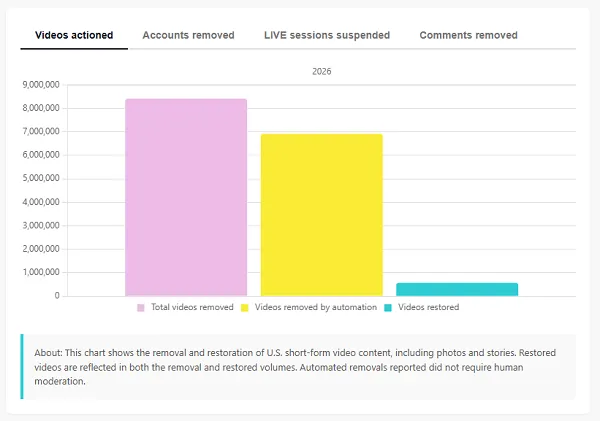
These stories may appear unrelated at first glance, but together they reveal something important about where TikTok is heading: the company is simultaneously restructuring its workforce, strengthening relationships with major entertainment companies, and investing heavily in AI-powered content creation.
The Nashville decision was reported as part of an effort to streamline operations and better align teams for longer-term growth, while the Disney agreement pushes TikTok further into the professional entertainment ecosystem.
For creators, advertisers, marketers, and ordinary viewers, these changes deserve attention because TikTok is no longer simply a platform for short dance clips or viral challenges. It has increasingly become a place where entertainment discovery, creator culture, advertising, artificial intelligence, and traditional media overlap.
Disney's involvement is particularly significant because selected TikTok creators will be able to work with approved Disney assets, while some creator-produced videos are expected to appear within Disney+'s new vertical-video experience. At the same time, Seedance 2.5 points toward a future where creators and businesses can produce more elaborate video advertisements without relying entirely on conventional filming workflows. Meanwhile, the Nashville restructuring highlights the less visible side of platform growth: as technology and automation advance, companies are also reconsidering how teams are organized and where human workers fit into the system.
Three Developments Shaping TikTok
🏢 Nashville Restructuring
TikTok plans to close its Nashville office in October 2026, affecting approximately 250 employees, with many of those workers associated with trust and safety operations. The company has described the move as an operational streamlining effort.
🎬 Disney Collaboration
Creators can use selected Disney characters and scenes in short-form content, with participating material potentially appearing on both TikTok and Disney+. The partnership includes Pixar, Marvel, Star Wars, and FX.
🤖 AI Video — Seedance 2.5
TikTok has integrated Dreamina Seedance 2.5, which is designed to produce higher-quality video and support clips of up to 30 seconds for advertising workflows — with multimodal references, camera control, and localized editing.
📈 The Bigger Picture
Together, these stories reveal a platform in transition — balancing operational efficiency, entertainment partnerships, and AI integration to build a more sophisticated ecosystem around creation and advertising.
TikTok Shuts Nashville Office and Cuts 250 Jobs
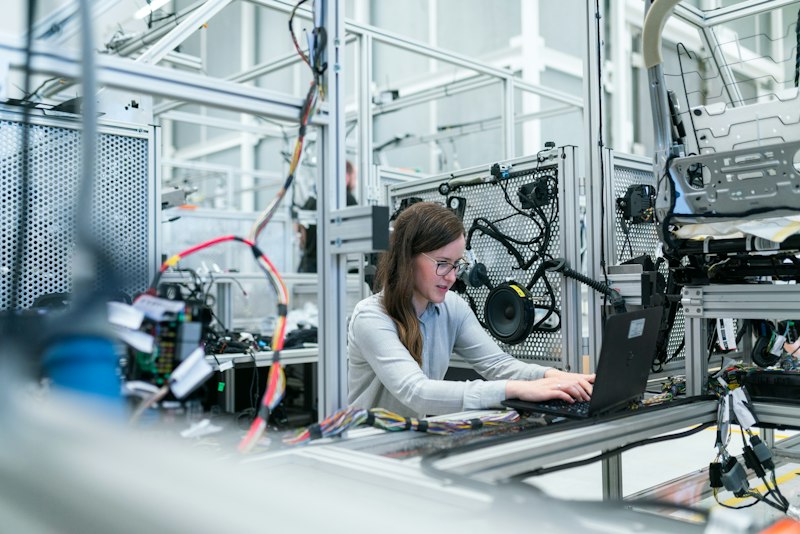
The Nashville announcement is probably the most serious of the three developments because it directly affects employees. TikTok is preparing to close its Nashville office in October 2026, with around 250 workers affected by the decision. Reports say employees were informed in early August, and the company subsequently provided information about the transition and severance arrangements.
TikTok US Data Security, the joint venture overseeing the company's U.S. operations, said the closure is intended to streamline operations and align teams with long-term growth plans.
For the employees involved, however, corporate restructuring is much more personal than a sentence in a business announcement makes it sound. A company can describe a decision using terms such as efficiency, alignment, or optimization, but behind those words are people whose daily routines, careers, and financial plans can change almost overnight.
Reports indicate that the Nashville workforce was given information about the closure in August and that employees would remain on payroll for a period before the office formally shuts. The situation also illustrates how large technology platforms are continually reviewing their physical offices and workforce requirements as digital systems become more distributed and automated.
What Happened in Nashville
The Nashville office has been associated with TikTok's trust and safety operations, an area that is especially important for a social platform serving enormous volumes of user-generated content. Trust and safety teams deal with issues ranging from policy enforcement and content review to efforts intended to protect users and maintain platform integrity.
When a company changes how this work is performed, the consequences can reach far beyond an individual office because moderation is closely connected with the overall user experience. The reported closure therefore raises broader questions about how TikTok plans to distribute this work across other locations, contractors, and technology systems.
The restructuring also comes at a time when technology companies are increasingly experimenting with AI-assisted workflows. AI can process huge amounts of information quickly, identify patterns, and assist human teams with repetitive tasks, although it does not automatically eliminate the need for human judgment. Content moderation is particularly complicated because context, language, cultural differences, sarcasm, and borderline material can make automated decisions difficult.
TikTok's reported shift therefore represents part of a much larger technology-industry debate: how should companies balance automation, efficiency, human expertise, and user safety as their platforms continue to grow?
Why TikTok Says It Is Restructuring
From TikTok's perspective, restructuring is about building an operating model that the company believes can support its next stage of growth. The company's stated reasoning centers on streamlining operations and aligning teams more closely with long-term objectives. That kind of explanation is common when technology companies reorganize, but the timing is still significant because TikTok is simultaneously investing in new creator tools, entertainment partnerships, and artificial intelligence.
That combination suggests that TikTok is not simply shrinking. Instead, the company appears to be redirecting resources toward areas it considers strategically important. A company can reduce jobs in one department while increasing investment in another, much like a city closing an old road while building a new highway. The important question is therefore not simply how many employees TikTok is cutting, but what kinds of capabilities it is choosing to prioritize for the future.
What the Nashville Layoffs Mean for TikTok
The Nashville decision could have implications for how TikTok handles trust and safety in the United States. According to reporting, the work will not simply disappear; trust and safety operations are expected to continue through other U.S. locations and different operational arrangements. This matters because TikTok's enormous content volume requires systems that can identify problematic material while also handling legitimate expression and rapidly changing online trends.
The bigger story may be the growing combination of human moderation and technological tools. AI systems can help prioritize content, detect suspicious patterns, and reduce repetitive workloads, but difficult decisions often still require human context. As TikTok and other platforms automate more processes, users may never notice the organizational changes behind the scenes unless something goes wrong. That is why workforce restructuring in trust and safety deserves attention: it affects one of the invisible systems that helps determine what users see, what gets removed, and how quickly platforms respond to emerging problems.
The Changing Role of Trust and Safety
Trust and safety has become one of the most complicated responsibilities for any large social network. A platform has to respond to harmful content while preserving legitimate speech, and it must do so across languages, cultures, age groups, and legal environments. Human moderators bring contextual understanding, while automated systems can work at a scale that would be impossible for humans alone. The challenge is finding a balance where technology improves efficiency without creating unacceptable gaps in judgment.
TikTok's Nashville restructuring provides another example of how that balance is evolving. Reports have linked the changes to greater reliance on contractors and AI-assisted tools, suggesting that some moderation workflows may be reorganized rather than simply eliminated. For users, the real test will be whether these changes maintain or improve the quality and consistency of platform safety. For TikTok, the challenge is to make automation work like a smart assistant rather than an uncontrolled replacement for human oversight.
TikTok and Disney Create a New Creator Partnership

The Disney partnership represents a completely different side of TikTok's current strategy. Rather than focusing on internal operations, it focuses on content, fandom, and creator culture. Under the new agreement, selected TikTok creators will be able to use approved Disney characters and scenes in their short-form videos. The participating properties reportedly include some of the world's most recognizable entertainment brands, including Pixar, Marvel, Star Wars, and FX.
The idea is powerful because TikTok users are already creating fan videos around movies, television shows, celebrities, and fictional characters. Instead of leaving that activity entirely informal, the partnership creates a more structured relationship between a major rights holder and a social platform. Disney can benefit from creator enthusiasm, while TikTok can offer creators access to recognizable intellectual property. It is almost like giving a group of independent filmmakers access to a much larger stage, while the studio gains another way to keep its franchises active in online culture.
How Disney Characters Could Appear in Creator Videos
The agreement is expected to give participating creators access to approved Disney assets for short-form storytelling. Rather than simply reposting movie scenes, creators can build original vertical videos around recognizable characters and entertainment worlds under the terms of the program. This distinction matters because TikTok culture thrives on remixing, reacting, parodying, explaining, and creatively transforming popular media. The partnership creates a pathway for those behaviors to happen with official access rather than relying entirely on unauthorized material.
The opportunity could be especially attractive to creators who already produce movie, television, cosplay, fan-theory, review, or entertainment-focused content. Imagine a creator producing a short Marvel-themed concept, a Star Wars fan video, a Pixar-inspired creative piece, or another approved format and then having the possibility of that content reaching audiences through Disney's ecosystem as well as TikTok. The arrangement also provides Disney with a way to observe how fans naturally interact with its intellectual property in a mobile-first environment.
Disney+ Enters the Vertical Video Space
One of the most interesting parts of the agreement is the connection with Disney+. Selected TikTok creator videos are expected to appear in Disney+'s new Verts vertical-video experience. Reuters described this as a first collaboration of its kind between TikTok and a traditional media company, with the initiative initially planned as a U.S. pilot before potential international expansion.
This is significant because vertical video has become a dominant format for mobile entertainment. For years, traditional streaming platforms focused primarily on longer horizontal programs and movies, while social networks perfected short vertical viewing. Disney's move suggests that the company recognizes the changing habits of younger audiences and wants to bring creator-driven short-form experiences into its own streaming environment. It also means TikTok content could potentially travel in the opposite direction — from a social platform into a major streaming service — creating a new bridge between creator culture and traditional entertainment.
Why the Disney Partnership Matters
The Disney deal could change the relationship between social media creators and traditional entertainment companies. Historically, studios have controlled characters, scenes, music, and other intellectual property through highly structured production systems. TikTok operates differently: trends can emerge from ordinary users within hours, and audiences often participate directly in the creation of entertainment. Bringing those two worlds together creates a hybrid model in which professional entertainment brands provide recognizable assets while creators supply the speed, personality, and cultural relevance.
There is also a marketing advantage. Disney does not have to rely only on conventional trailers, television advertising, or studio-produced social posts to promote its entertainment properties. Creators can become part of the storytelling process itself, potentially generating thousands of variations around a franchise. TikTok, meanwhile, benefits because recognizable entertainment brands can encourage users to spend more time creating and watching content. The partnership therefore resembles a two-way bridge: Disney gains access to creator energy, while TikTok gains deeper integration with one of the world's largest entertainment ecosystems.
TikTok has worked with Disney before. In 2023, the companies launched a Disney100 experience featuring content and interactive elements spanning Disney, Pixar, Marvel, Star Wars, National Geographic, ESPN, and Disney Parks. TikTok said at the time that Disney-operated accounts had more than 150 million followers collectively, demonstrating the enormous existing audience around Disney content on the platform. The 2026 partnership therefore looks less like an isolated experiment and more like another step in an ongoing relationship.
 ★ Best Seller
Master TikTok advertising with proven creative frameworks and campaign optimization tactics.
- Strategy frameworks
- Creative hooks
- Audience targeting
- Campaign scaling
Affiliate link. Terms & pricing set by seller.
TikTok Expands AI Video Creation With Seedance 2.5

While the Disney agreement is about human creativity and intellectual property, TikTok's Seedance 2.5 development is about machine-assisted creativity. TikTok announced the integration of Dreamina's Seedance 2.5 video-generation model in early August 2026, with the technology positioned as a way to create higher-quality video content for TikTok's audience. Social Media Today reported that the updated model allows advertisers to generate video clips of up to 30 seconds, compared with the previous 15-second capability.
That longer duration may sound like a small technical upgrade, but it can make a meaningful difference for advertisers. A 15-second advertisement often has to move extremely quickly: hook the viewer, introduce the product, explain the benefit, and provide a call to action almost immediately. Thirty seconds gives marketers more room to tell a mini-story. Dreamina's current Seedance 2.5 materials also describe multimodal references and tools intended to improve consistency, camera movement, and targeted editing.
What Seedance 2.5 Brings to TikTok
The most interesting part of Seedance 2.5 is not simply that it can generate longer videos. The broader goal is to make AI-generated video more useful for real creative workflows. Dreamina describes support for up to 50 multimodal references, allowing creators to provide combinations of images, videos, audio, and other materials. It also promotes localized editing, meaning creators can adjust specific elements rather than regenerating an entire piece from scratch.
For a marketer, that could mean creating multiple versions of an advertisement while keeping the central product and visual identity consistent. For a creator, it could mean developing a more complete story instead of stitching together several very short AI clips. For an agency, it could potentially reduce the time needed to test different concepts, opening, camera movements, or visual styles. The technology does not remove the need for creative direction; if anything, the ability to generate more content makes good ideas, strong prompts, editing judgment, and brand strategy even more important.
Longer AI Videos Could Change Advertising
Advertising on TikTok has always rewarded speed. A viewer can swipe away from an advertisement almost instantly, so brands have to compete with entertaining creators and rapidly changing trends. AI video generation could intensify that competition because marketers may be able to produce more creative variations without organizing a new filming session for every concept. Seedance 2.5's 30-second generation capability therefore has implications beyond convenience: it could make video experimentation faster and potentially allow brands to test storytelling formats that would previously have required greater production resources.
At the same time, AI-generated advertising introduces a new challenge — authenticity. TikTok users are accustomed to creator-style content that feels spontaneous and personal, and an obviously artificial advertisement can sometimes feel disconnected from that culture. The most successful brands may therefore use AI as a production assistant rather than allowing it to completely replace human creativity. A good concept, authentic message, accurate product representation, and thoughtful editing still matter even when a machine generates much of the visual material.
What This Means for Marketers and Creators
For marketers, the practical lesson is to think in terms of creative testing rather than simply AI generation. Instead of producing one polished advertisement and hoping it performs, a brand could potentially develop several hooks, narratives, product demonstrations, and calls to action. The better-performing concepts can then receive additional investment. This approach fits TikTok particularly well because the platform rewards content that connects with specific audience interests rather than simply following traditional advertising formulas.
Creators can also benefit, especially those who use AI as part of their workflow. Seedance 2.5 can help transform ideas into visual experiments, storyboards into moving scenes, and product references into short-form concepts. Dreamina's documentation describes features such as 30-second generation, reference-based workflows, camera control, and targeted edits, all of which point toward a more production-oriented approach to AI video. The important distinction is that AI can accelerate execution, but the creator still needs to decide what should be created and why.
Three TikTok Trends to Watch Next
🎬 1. TikTok + Traditional Entertainment
The Disney partnership demonstrates that major studios increasingly recognize short-form creators as part of the entertainment ecosystem. If the Disney pilot succeeds, similar collaborations could become more common, potentially giving creators structured access to additional entertainment properties.
🤖 2. AI-Generated Video Goes Mainstream
TikTok's integration of Seedance 2.5 shows that AI creation is moving closer to everyday social-media workflows. As generation quality improves, the difference between an AI production tool and a conventional video editor may become less obvious to ordinary users — which could lead to an explosion of content, but also make originality harder to achieve.
🏢 3. Organizational Efficiency & Automation
The Nashville closure shows that TikTok is examining how its workforce operates while technology changes the economics of large-scale platform management. The future may involve fewer traditional workflows and greater use of automation, contractors, centralized teams, and AI-assisted systems.
What These Developments Mean for TikTok Users
For everyday TikTok users, these developments could gradually change what appears in their feeds and how content is produced. More entertainment partnerships could bring official franchise experiences into the platform, while AI tools could lead to a larger supply of highly polished videos. Users may see more professional-looking advertisements and more creator content that blends real footage with generated visuals. At the same time, the platform's internal safety systems may continue evolving as TikTok adjusts its workforce and technology.
The interesting question is whether users will notice the difference. A successful platform change is often invisible: if moderation improves, users simply encounter a safer experience; if content creation tools improve, viewers may just see better videos. But if AI-generated material becomes extremely common, audiences may become more skeptical and begin valuing human-made content precisely because it feels less manufactured. TikTok's next challenge may therefore be balancing scale with authenticity.
What Businesses Should Learn From the Changes
Businesses watching TikTok should avoid treating these developments as isolated technology headlines. The bigger lesson is that TikTok is becoming an increasingly sophisticated ecosystem where entertainment partnerships, creators, advertising, AI, and platform operations interact. A company that wants to succeed on TikTok needs more than a few promotional videos. It needs to understand audience behavior, creative formats, intellectual-property rules, advertising tools, and the growing role of AI.
The Disney partnership also highlights the value of collaboration. Businesses do not necessarily have to create every piece of content themselves. Working with creators can provide personality and cultural relevance, while official partnerships can provide access to recognizable assets and audiences. AI can then potentially speed up production and testing. The strongest strategy may therefore look less like a traditional advertising department and more like a small creative studio that combines people, technology, creators, and data.
The Bigger Picture for TikTok in 2026
Taken together, these three stories paint a fascinating picture of TikTok's direction. The Nashville restructuring represents the operational side of the platform, where TikTok is trying to make its organization more efficient. The Disney agreement represents the entertainment side, where the platform is building stronger relationships with major intellectual-property owners and giving creators a larger role. Seedance 2.5 represents the technology side, where AI is being integrated directly into the process of producing social video.
That combination makes 2026 an important year for TikTok. The platform is not simply trying to create more short videos; it is building an ecosystem around creation, entertainment, advertising, and artificial intelligence. The Disney partnership could make TikTok content more connected to mainstream entertainment, while Seedance could make sophisticated video creation accessible to a broader group of advertisers and creators. At the same time, the Nashville changes show that such expansion comes with difficult organizational decisions and questions about how technology will reshape the workforce.
Conclusion
The latest TikTok news shows a platform in transition. The closure of the Nashville office and the reduction of 250 positions reveal a major operational restructuring, particularly around trust and safety. The Disney partnership moves TikTok closer to the traditional entertainment industry by connecting creators with approved Disney content and opening a pathway for selected videos to appear on Disney+. Meanwhile, Seedance 2.5 demonstrates TikTok's growing interest in AI-powered video creation, with longer generation and more advanced creative controls designed to support creators and advertisers.
The common thread is change. TikTok is simultaneously changing how it operates, who it works with, and how content can be created. For creators, that means more tools and potentially more opportunities; for brands, it means faster experimentation and new ways to tell stories; for entertainment companies, it provides another route to connect their franchises with younger audiences. But the platform will also have to answer difficult questions about workforce changes, AI-generated content, authenticity, intellectual property, and user safety. The next chapter of TikTok may be less about viral videos alone and more about how technology, creators, and global entertainment come together in one rapidly evolving ecosystem.
FAQs
Three major developments include TikTok's planned Nashville office closure affecting 250 employees, its new partnership with Disney for creator-focused short-form content, and the integration of Dreamina Seedance 2.5 for AI-powered video creation. Together, these developments highlight changes in TikTok's workforce, entertainment strategy, and creative technology.
TikTok has said the Nashville closure is part of an effort to streamline operations and better align its teams with long-term growth. Reports indicate that approximately 250 employees are affected and that trust and safety operations will continue through other U.S. locations and operational arrangements.
The partnership allows selected TikTok creators to use approved Disney assets, including characters and scenes from properties such as Pixar, Marvel, Star Wars, and FX. Selected creator videos are also expected to be available through Disney+'s new vertical-video experience called Verts, initially through a U.S. pilot.
Seedance 2.5 is an AI video-generation model integrated into Dreamina and TikTok's broader creative ecosystem. It is designed to create higher-quality video and supports generation of clips up to 30 seconds, while Dreamina describes additional features such as multimodal references, camera control, and localized editing.
AI is more likely to change the creator workflow than completely eliminate creators. Tools such as Seedance 2.5 can help with production, visual experimentation, and advertising, but human creators remain important for ideas, personality, storytelling, cultural understanding, and audience relationships. The Disney partnership itself also demonstrates the continuing importance of human-led creator content.

If you have any doubts, Please let me know