

OnePlus Ace 7 Series
The 10,000mAh Flagship Killer Returns
Snapdragon 8 Elite Gen 5 · 240Hz Display · 2nm Silicon · Triple 50MP Cameras

📷 Image: 91mobiles
⚡ Redefining the Flagship Killer Paradigm
For years, the OnePlus Ace lineup has served as a critical testing ground for the brand's most aggressive hardware innovations, specifically within the Chinese domestic market. Unlike the globally distributed numerical flagship series, the Ace line historically prioritizes sheer brute force—maximizing thermal efficiency, processor clock speeds, and charging capabilities at the expense of subtle aesthetic refinements. The upcoming OnePlus Ace 7 Series, recently leaked through prominent industry sources including Digital Chat Station on Weibo, indicates a radical escalation of this strategy. By introducing specifications that border on experimental, OnePlus is transforming the Ace 7 and its Pro counterpart into mobile powerhouses designed to shatter existing performance ceilings.
The architectural split between the standard Ace 7 and the Ace 7 Pro highlights a dual-pronged market attack. The baseline model is tailored for the hardcore performance enthusiast and gaming demographic, prioritizing unprecedented refresh rates and an almost unimaginably massive battery capacity. Conversely, the Pro model pivots toward a more holistic premium flagship experience, balancing cutting-edge 2nm silicon with a formidable triple 50MP camera array. This calculated divergence allows OnePlus to capture distinct consumer segments without cannibalizing its own sales, reinforcing the brand's dominance in the highly competitive high-end smartphone sector.
📢 Limited Offer — Grab the Best Deals on Premium Smartphones
🔥 Shop Now & Save Big →📊 Market Implications for Q4 2026 & Beyond
Anticipated for a Q4 2026 launch, the OnePlus Ace 7 Series arrives at a pivotal juncture in the smartphone industry. Hardware manufacturers are currently battling severe diminishing returns regarding year-over-year performance gains. By introducing technologies like silicon-carbon (Si/C) battery structures that double traditional capacities without drastically increasing physical footprint, OnePlus is forcing a paradigm shift. Competitors who have comfortably rested on standard 5,000mAh power cells will face immense pressure to adapt or risk immediate obsolescence in the eyes of power users.
Furthermore, the introduction of next-generation Qualcomm Snapdragon chipsets—specifically the 8 Elite Gen 5 and the unannounced Gen 6—signals a leap in mobile computational power. As mobile gaming engines become increasingly sophisticated and on-device machine learning requires vast neural processing capabilities, the hardware baselines established by the Ace 7 Series will likely dictate the minimum viable product standards for the 2027 fiscal year. The global market, while not receiving the Ace branding directly, will closely monitor this launch, as these technologies inevitably trickle down into future international releases like the OnePlus numerical and R-series variants.

📷 Image: 91mobiles
🔥 The Standard OnePlus Ace 7
Pushing the Boundaries of Mobile Hardware

📷 Image: 91mobiles
Snapdragon 8 Elite Gen 5: The 3nm Performance Engine
At the core of the standard OnePlus Ace 7 lies the formidable Qualcomm Snapdragon 8 Elite Gen 5 chipset (SM8850-AC). Built on a highly efficient 3-nanometer manufacturing process, this octa-core processor represents a masterclass in thermal and energetic efficiency. The architecture features an aggressive cluster design, utilizing two high-performance Oryon V3 Phoenix L cores clocked at a staggering 4.61 GHz, supported by six Oryon V3 Phoenix M efficiency cores running at 3.62 GHz. This specific configuration allows the device to handle burst-heavy tasks like high-fidelity rendering and emulation with zero stutter, while intelligently offloading background processes to the efficiency cores to preserve battery life.
Graphics processing is handled by the Adreno 840 GPU, a component expected to deliver desktop-grade rendering techniques to the mobile form factor. Coupled with UFS 4.1 storage options scaling up to 1TB and RAM configurations reaching 16GB, the Ace 7 is engineered to eliminate data bottlenecking entirely. High-resolution textures, massive application caches, and complex multitasking environments will load instantaneously. This silicon foundation guarantees that the device will not just run modern intensive applications, but will comfortably handle the next three to four years of software inflation.
📱 185Hz–240Hz Adaptive Display
Display technology is another arena where the OnePlus Ace 7 completely subverts industry norms. The device is tipped to feature a 6.78-inch LTPS AMOLED OLED display with a crisp 1.5K resolution (1272×2800 pixels, ≈454 ppi). However, the true disruptive element is the variable refresh rate. Standard flagships currently peak at 120Hz or 144Hz, but the Ace 7 is pushing an adaptive refresh rate spanning from 185Hz up to 240Hz. This level of visual fluidity is traditionally reserved for dedicated, high-end e-sports monitors.
The implementation of a 240Hz ceiling is not merely a vanity metric; it fundamentally alters the tactile response of the operating system. Touch sampling synchronization at these frequencies reduces input latency to near-zero milliseconds, providing a distinct competitive advantage in frame-perfect mobile gaming. Furthermore, the adaptive nature of the LTPS panel ensures that when the user is reading static text or viewing still images, the refresh rate plummets to conserve power. Supplemented by PWM dimming, HDR10+, Dolby Vision, and HDR Vivid support, the screen guarantees deep contrast ratios and absolute color accuracy under BOE's Crystal Shield Glass protection.
🔋 The 10,000mAh Battery Revolution
Perhaps the most shocking revelation from the recent leaks is the battery capacity of the standard OnePlus Ace 7. Reports indicate the inclusion of a Silicon-Carbon (Si/C) Li-Ion battery ranging between 9,000mAh and a monumental 10,000mAh. Traditional graphite-anode lithium-ion batteries hit a physical volume limit; packing 10,000mAh into a modern smartphone chassis using old technology would result in an impractically thick, heavy brick. Silicon-carbon technology, however, dramatically increases energy density, allowing manufacturers to double the capacity within a comparable physical footprint.
To manage this massive power reserve, OnePlus is equipping the Ace 7 with 100W to 120W fast wired charging. While filling a 10,000mAh cell inherently takes longer than a 5,000mAh one, the 120W input ensures that users can regain multiple days of standard use with just a 20-minute charge. Crucially, the device features "Bypass Charging," a system that allows external power to run the phone's logic board directly without passing through the battery. This prevents thermal degradation during intense, plugged-in gaming sessions, preserving the long-term health of the silicon-carbon cell.
🎯 Exclusive Deal — Don't Miss Out on the Latest Flagship Offers
⚡ Claim Your Discount Now →✨ The OnePlus Ace 7 Pro
Uncompromising Premium Specifications
Snapdragon 8 Gen 6: The 2nm Processing Milestone
If the standard Ace 7 is a gaming powerhouse, the OnePlus Ace 7 Pro is an exercise in bleeding-edge silicon supremacy. Leaks suggest the Pro variant will be powered by the completely unannounced Qualcomm Snapdragon 8 Gen 6 processor. The defining characteristic of this chipset is its reliance on a 2-nanometer fabrication process. Shrinking the transistor gate length to 2nm allows for a massive increase in transistor density, resulting in exponential gains in both computational speed and energy efficiency compared to the 3nm Gen 5.
Industry whispers point toward this processor achieving clock speeds of up to 5GHz. Breaking the 5GHz barrier on a mobile device without inducing immediate thermal throttling is a monumental engineering challenge. This processing capability will likely unlock true on-device generative AI, allowing the phone to process complex language models and image generation natively without relying on cloud-based server farms. For enterprise users and creatives, this means absolute data privacy and instantaneous processing speeds for demanding computational tasks.
6.82-Inch 2K Curved BOE X2 Display
Diverging from the flat panels favored by competitive gamers, the OnePlus Ace 7 Pro adopts a more luxurious aesthetic with a 6.82-inch 2K curved OLED display. Utilizing the highly coveted BOE X2 panel, this screen is designed for uncompromising media consumption and photographic review. The curvature of the glass minimizes bezel visibility, creating an immersive, edge-to-edge viewing experience that rests ergonomically in the hand.
While it caps its refresh rate at a more traditional 120Hz compared to the standard model's 240Hz, the Pro prioritizes resolution and luminance. The BOE X2 panel is expected to feature extraordinarily high peak brightness levels, likely surpassing 4,500 nits, ensuring perfect legibility even under direct, harsh sunlight. The 2K resolution guarantees pixel-perfect clarity, making it the ideal canvas for editing high-resolution RAW photos captured by the device's advanced optical array.
📷 Image: 91mobiles
📸 Triple 50MP Camera Array: Sony LYT808 & Periscope Zoom
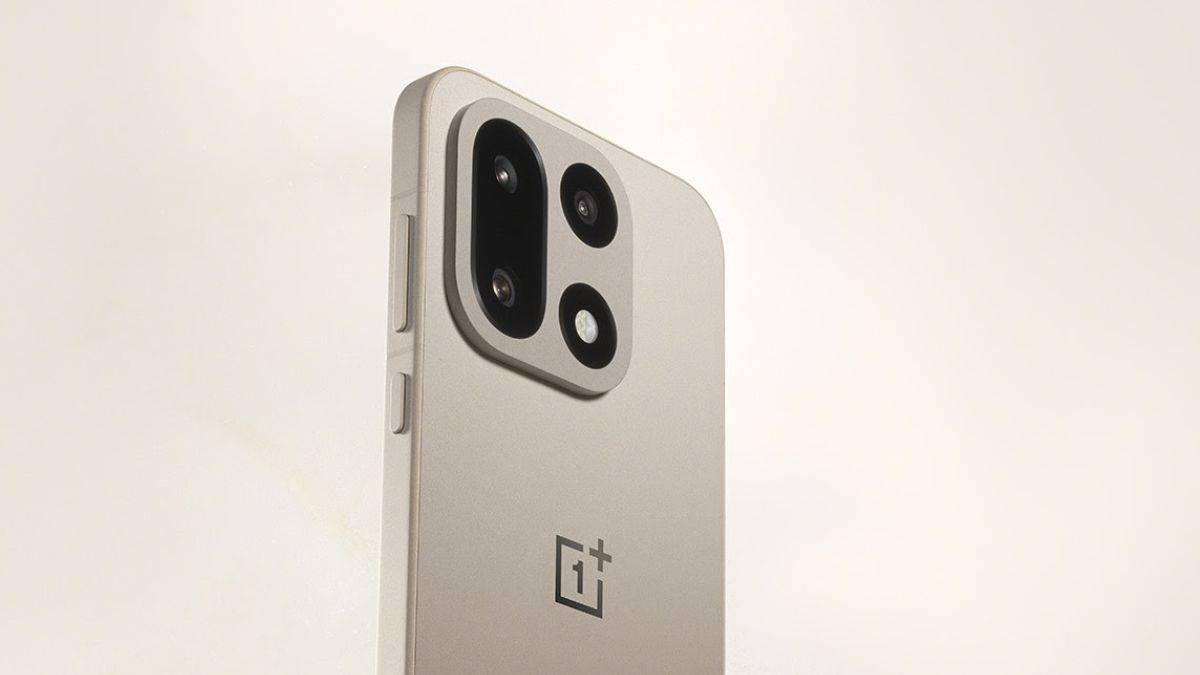
The camera architecture is where the OnePlus Ace 7 Pro firmly separates itself from its baseline sibling. While the standard Ace 7 utilizes a dual-camera setup (50MP main with OIS and an 8MP ultra-wide), the Pro variant boasts a flagship-tier triple 50MP system. The primary shooter utilizes the Sony LYT808 sensor, a large-format lens renowned for its exceptional light-gathering capabilities and dynamic range. This sensor excels in low-light environments, utilizing advanced pixel-binning algorithms to produce crisp, noise-free images in near darkness.
Accompanying the main sensor is a 50MP ultra-wide-angle lens and a highly sought-after 50MP periscope telephoto lens capable of 3x optical zoom. The integration of a high-resolution periscope system ensures that users can compress backgrounds and capture stunning portrait photography without the digital artifacting associated with standard cropping. This holy trinity of 50MP sensors ensures color consistency and detail parity across all focal lengths, providing a professional-grade mobile photography experience that rivals top-tier international flagships.

📷 Image: GSMArena
🌡️ Thermal Management, Connectivity & Software Ecosystem
🌀 Active Cooling & Advanced Thermal Mechanics
Housing processors clocked between 4.61GHz and 5.0GHz, alongside up to 10,000mAh batteries and 120W charging arrays, generates immense thermodynamic stress. To mitigate thermal throttling, the standard OnePlus Ace 7 is tipped to feature an actual active cooling fan. While passive vapor chambers are standard, a physical, miniaturized mechanical fan actively expels heat from the chassis, drastically lowering the core temperatures of the Snapdragon silicon during sustained synthetic benchmarks or demanding 3D gaming. This aggressive cooling solution guarantees frame-rate stability over prolonged sessions, preventing the sudden performance drops that plague passive-cooled devices.
📡 ColorOS 16, IP69K Durability & Ultrasonic Security
On the software front, both devices in the Ace 7 Series are slated to launch with Android 16 layered under Oppo/OnePlus's proprietary ColorOS 16 (specific to the Chinese market). ColorOS 16 is expected to heavily integrate localized AI features, deep battery management protocols tailored for the new Si/C cells, and a refined, bloat-free user interface.
Durability and security have also seen major structural upgrades. The devices boast an IP68/IP69K rating, making them completely dust-tight and resistant not only to prolonged submersion in water but also to high-pressure, high-temperature water jets. Security is handled by an under-display ultrasonic fingerprint sensor. Unlike optical sensors that rely on a flash of light and can be spoofed by 2D images, ultrasonic technology uses high-frequency sound waves to map the 3D ridges of a user's fingerprint, working flawlessly even when hands are wet or greasy. Connectivity is equally future-proofed, featuring Wi-Fi 7, Bluetooth 5.4 with aptX Adaptive and LHDC 5 support, NFC, and an infrared port for universal remote control functionalities.
🎯 Conclusion
The leaked specifications of the OnePlus Ace 7 and Ace 7 Pro represent a watershed moment in smartphone engineering. By fracturing its lineup into two highly specialized tiers, OnePlus is effectively corners the market on both raw, unadulterated performance and holistic, premium utility. The standard Ace 7, armed with a 240Hz display, a 3nm processor, and a paradigm-shifting 10,000mAh silicon-carbon battery, is poised to become the ultimate enthusiast device, obliterating traditional battery anxiety. Meanwhile, the Ace 7 Pro leverages the microscopic 2nm architecture of the Snapdragon 8 Gen 6 and a flawless triple 50MP Sony camera array to deliver a refined, elite user experience. When this series launches in Q4 2026, it will not merely compete with the current market; it will forcefully drag the entire mobile industry into a new era of silicon and battery technology.
🛒 Ready to Upgrade? Grab the Best Smartphone Deals Today
🔥 Explore Exclusive Offers →❓ Frequently Asked Questions
1. What is the expected battery capacity of the OnePlus Ace 7?
The standard OnePlus Ace 7 is leaked to feature a massive Silicon-Carbon (Si/C) battery ranging between 9,000mAh and 10,000mAh, supported by 100W or 120W fast wired charging and bypass charging technology.
2. Which processors are powering the new Ace 7 Series?
The baseline OnePlus Ace 7 will utilize the 3nm Qualcomm Snapdragon 8 Elite Gen 5 (up to 4.61GHz), while the Ace 7 Pro is expected to debut with the unannounced 2nm Snapdragon 8 Gen 6 processor, potentially reaching clock speeds of 5GHz.
3. Will the OnePlus Ace 7 have a high refresh rate display?
Yes, the standard Ace 7 is tipped to feature an unprecedented adaptive refresh rate ranging from 185Hz up to 240Hz on a 6.78-inch 1.5K LTPS AMOLED screen, making it exceptionally smooth for gaming.
4. What are the camera specifications for the OnePlus Ace 7 Pro?
The OnePlus Ace 7 Pro will feature a premium triple-camera setup, including a 50MP Sony LYT808 primary sensor, a 50MP ultra-wide lens, and a 50MP periscope telephoto lens with 3x optical zoom.
5. When is the OnePlus Ace 7 Series expected to launch?
While an exact date has not been officially confirmed by OnePlus, industry leaks suggest that the Ace 7 and Ace 7 Pro will make their debut in the Chinese market during the fourth quarter (Q4) of 2026.
© 2026 · OnePlus Ace 7 Series · All rights reserved.
📷 Image Credits: 91mobiles · GSMArena
⚡ Affiliate Disclosure: We may earn a commission on qualifying purchases.

If you have any doubts, Please let me know