

🔐 Handala Hacking Group & California Water Service Breach: What You Need to Know
Critical infrastructure under fire — separating facts from fear in the 2026 cyber landscape
Introduction to the Alleged Cyberattack
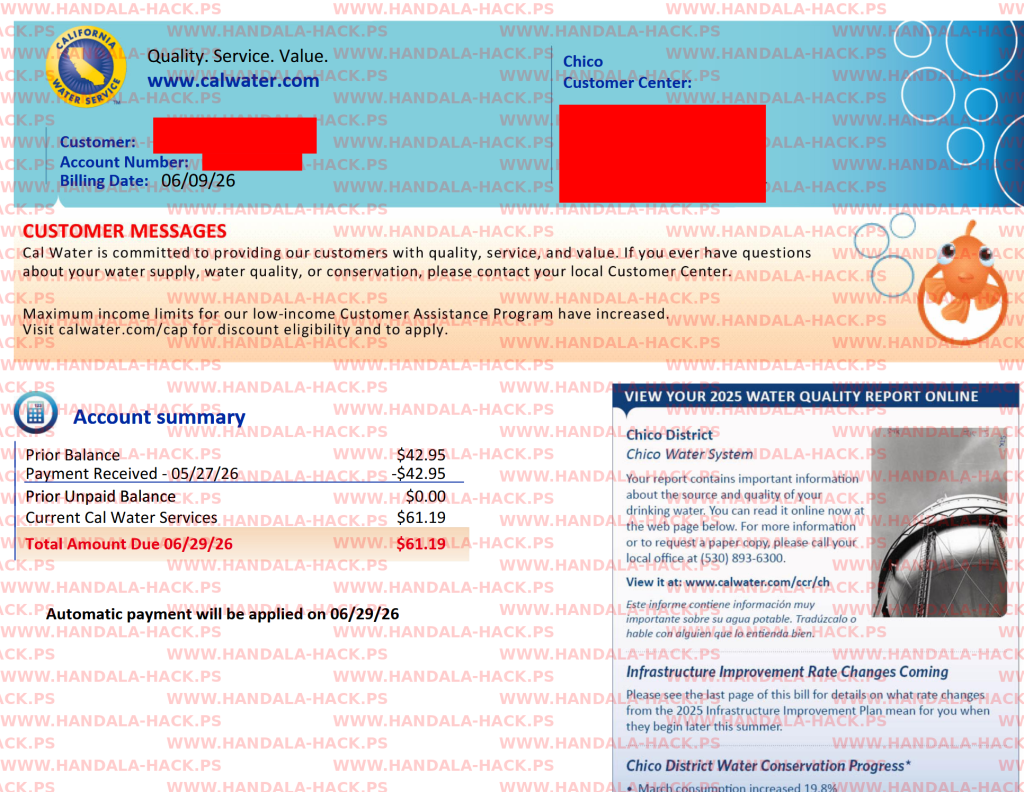
The cybersecurity world was shaken by reports that the Handala hacking group claimed responsibility for a breach involving California Water Service (Cal Water), one of the largest water utility providers in the United States. The incident quickly became a trending topic across cybersecurity news platforms, social media discussions, and threat intelligence communities because it involved critical infrastructure—an area that governments and security experts consider highly sensitive. According to reports released during June 2026, Handala claimed it gained access to systems associated with California water infrastructure and published evidence that allegedly included customer-related data and administrative information.
What makes this event particularly significant is not simply the data breach claim itself. The hackers publicly suggested that they had the ability to interfere with water-related systems but chose not to do so, describing the operation as a warning rather than a destructive attack. Security researchers, however, emphasized that there is currently no confirmed evidence that operational water treatment or distribution systems were affected. The incident highlights an ongoing trend in modern cybersecurity where cyberattacks increasingly intersect with geopolitical tensions, public infrastructure, and psychological influence campaigns. As organizations worldwide continue their digital transformation efforts, incidents like this serve as reminders that cybersecurity is no longer just an IT issue—it is a matter of public safety, economic stability, and national security.
📸 Image credit: Hackread.com
🕵️ Who Is the Handala Hacking Group?
Origins and Background
The Handala hacking group has become one of the most talked-about cyber threat actors of 2026. Cybersecurity researchers and intelligence analysts generally describe the group as being linked to Iranian interests, although many of its claims remain difficult to independently verify. Over recent months, Handala has repeatedly appeared in headlines for alleged attacks against government agencies, healthcare organizations, infrastructure providers, and other high-profile targets. The group has built a reputation for combining cyber intrusion activities with aggressive public messaging designed to attract attention and influence public perception.
Unlike traditional cybercriminal organizations focused solely on financial gain, Handala presents itself as a politically motivated actor. The group's statements often frame cyberattacks as retaliation for geopolitical events. This approach places Handala within the broader category of cyber-enabled influence operations, where the goal extends beyond stealing information to shaping narratives and demonstrating power. Cybersecurity experts have repeatedly noted that such groups often blend genuine technical capabilities with exaggerated claims. This makes it essential to distinguish between verified facts and public statements released by threat actors themselves. The California Water Service incident is a perfect example of this challenge because investigators continue analyzing the available evidence while the group's public claims receive widespread media attention.
Previous High-Profile Cyber Operations
Handala did not emerge overnight. Throughout 2026, the group has been associated with multiple alleged cyber incidents targeting organizations across different industries. Reports indicate that the group previously claimed responsibility for attacks involving healthcare providers, government systems, and private-sector enterprises. In several cases, Handala reportedly combined data theft with public leaks and threats designed to maximize media coverage.
Security analysts often point to a recurring pattern in Handala's activities. The group frequently announces large-scale compromises, publishes samples of stolen information, and accompanies those disclosures with politically charged statements. While some claims have been supported by evidence of unauthorized access, experts have also warned that Handala has a documented history of overstating the scale or impact of certain operations. This pattern is important because it provides context for evaluating the California Water Service breach claim. Understanding the group's past behavior helps organizations and the public interpret announcements critically while avoiding unnecessary panic.
Image source: Hackread.com
⚡ What Happened in the California Water Service Incident?
Timeline of Events
The California Water Service incident came to public attention when Handala announced that it had successfully infiltrated systems connected to California water infrastructure. Shortly afterward, the group released what it described as proof-of-concept data, reportedly totaling approximately five gigabytes. The leaked material allegedly included customer billing information and administrative credentials associated with internal systems. Threat intelligence researchers and cybersecurity analysts quickly began examining the available evidence to assess the credibility and scope of the claims.
As reports emerged, researchers identified indications that the attackers may have accessed a GPS correction network and customer billing systems rather than operational control systems directly responsible for water treatment or distribution. Several California service districts were reportedly referenced in the leaked information, including locations such as Bakersfield, Chico, Stockton, Salinas, Visalia, and San Mateo.
The timing of the announcement also drew attention because Handala framed the operation as retaliation connected to broader geopolitical tensions involving the United States and Iran. This narrative contributed to the rapid spread of the story across cybersecurity media outlets and social networks. While investigations remain ongoing, the event demonstrates how cyber incidents can quickly become international news when critical infrastructure and geopolitical issues intersect.
How the Breach Was Reported
One of the most interesting aspects of this case is how information about the breach emerged. Rather than first being disclosed by the victim organization, the initial attention came largely from the hackers' own announcements and subsequent analysis by threat intelligence researchers. This increasingly common pattern places organizations in a difficult position because they must investigate claims while responding to intense public scrutiny.
Security firms analyzing the leaked data suggested that at least some of the information appeared authentic. Researchers reported that customer billing records and administrative credentials were among the materials included in the alleged data dump. However, experts also cautioned against assuming that access to these systems automatically translates into control over water infrastructure operations. This distinction became a central theme in discussions surrounding the incident.
📷 Breach visualization: Hackread.com
📀 Data Allegedly Compromised
Customer Information Exposure
Reports analyzing the alleged breach indicate that the exposed information may include customer names, addresses, account details, billing information, and payment histories. Such data is highly valuable from a cybercriminal perspective because it can be used for identity theft, phishing campaigns, social engineering attacks, and financial fraud. Even when critical infrastructure remains operational, exposure of customer information can create serious consequences for affected individuals.
The incident serves as a reminder that utility providers manage vast quantities of sensitive information. Customers often focus on the physical services they receive, such as water, electricity, or gas, but behind the scenes these organizations maintain extensive databases containing personal and financial details. When attackers gain access to such information, the resulting privacy risks can persist long after the initial breach.
Administrative Credentials and System Access
Beyond customer information, researchers reported that administrative credentials associated with internal systems were also allegedly exposed. Administrative credentials are particularly concerning because they can provide attackers with elevated privileges, enabling further access within a network. Security professionals often describe credential theft as one of the most dangerous outcomes of a breach because it can facilitate future attacks.
The alleged exposure of credentials highlights a broader cybersecurity challenge facing critical infrastructure organizations worldwide. Modern utility networks rely on interconnected digital systems, cloud services, remote management platforms, and third-party technologies. A compromise affecting administrative accounts can potentially create opportunities for lateral movement across networks. Although investigators found no confirmed evidence that operational water systems were affected, experts stressed that all exposed credentials should be treated as compromised and replaced immediately.
IT Systems vs Operational Technology Systems
| System Type | Primary Function | Examples |
|---|---|---|
| IT Systems | Business Operations | Billing databases, email, customer portals |
| OT Systems | Physical Operations | Pumps, treatment controls, SCADA systems |
This distinction is crucial because access to a billing database does not automatically provide access to water treatment controls. Many utility providers maintain segmentation between business networks and operational environments to reduce risk. In the California Water Service case, analysts found no confirmed evidence that attackers crossed into operational technology environments.
💧 Did the Attack Disrupt Water Services?
Statements from Security Researchers
Perhaps the most important fact emerging from the investigation is that security researchers found no confirmed evidence that water treatment or distribution operations were disrupted. Analysts reviewing the available data concluded that the affected systems appeared to involve customer billing databases and supporting infrastructure rather than operational technology environments responsible for controlling water supplies.
Cybersecurity experts repeatedly emphasized that claims regarding the ability to shut off water services remain unverified. Some analysts specifically noted that Handala has a history of overstating capabilities, suggesting that public statements may be designed partly as psychological operations intended to generate fear and media attention. This assessment does not diminish the seriousness of the alleged breach, but it does underscore the importance of separating verified technical findings from speculative claims.
California Water Service Response
California Water Service reported that preliminary reviews of internal information technology and operational technology environments showed no signs of compromise affecting water production or delivery systems. Company representatives indicated that investigations were continuing while security teams assessed available evidence and monitored systems for suspicious activity.
The organization's response reflects a standard approach to critical infrastructure incidents. Rather than rushing to conclusions, utility operators typically conduct detailed forensic investigations before making definitive statements. This process involves reviewing logs, analyzing network activity, validating system integrity, and coordinating with cybersecurity experts.
🌍 Understanding Critical Infrastructure Cybersecurity
Why Water Utilities Are Prime Targets
Water utilities have become increasingly attractive targets for cyber threat actors because they represent essential services that communities depend upon every day. Unlike many private-sector organizations, water providers deliver resources that directly affect public health, economic activity, and emergency response capabilities. This critical role makes them appealing targets for cybercriminals, hacktivists, and nation-state actors seeking influence or disruption.
The growing digitization of infrastructure has expanded the attack surface available to adversaries. Modern utilities use interconnected sensors, remote monitoring systems, cloud-based management tools, and automated control technologies. These innovations improve efficiency but also create new cybersecurity challenges. Attackers understand that compromising even a portion of a utility's network can generate significant publicity. As a result, water infrastructure has become a focal point in discussions about national cyber resilience and critical infrastructure protection.
The Growing Threat of Nation-State and Hacktivist Cyber Groups
Cybersecurity increasingly functions as an extension of international politics. Governments, intelligence agencies, proxy groups, and politically motivated hackers use cyberspace to pursue strategic objectives that would be difficult or risky through traditional means. The Handala incident reflects this broader trend because the group explicitly framed the alleged attack within a geopolitical context.
Modern cyber conflicts rarely resemble the dramatic scenarios depicted in movies. Instead, they often involve data theft, influence campaigns, infrastructure probing, credential harvesting, and public messaging operations. These activities can create uncertainty, generate headlines, and influence public perception without causing immediate physical disruption.
Psychological Operations in Modern Cyberattacks
Many cybersecurity experts believe that psychological impact has become a key objective for certain threat actors. By publicly claiming access to sensitive systems and releasing selected evidence, attackers can create fear, attract media attention, and pressure organizations. Even when operational disruption does not occur, the perception of vulnerability can produce significant consequences. The California Water Service incident illustrates how cyberattacks increasingly combine technical intrusion with strategic communication.
📘 Lessons Organizations Can Learn from the Incident
Strengthening Infrastructure Security
The alleged breach offers valuable lessons across all sectors. Protecting critical infrastructure requires continuous monitoring, strong authentication controls, network segmentation, and rapid patch management. Multi-factor authentication, privileged access management, and regular security assessments remain among the most effective defenses against credential-based attacks.
Incident Response & Future Preparedness
Preparation often determines the outcome of a cybersecurity incident. Organizations with mature incident response programs detect threats faster, contain compromises effectively, and communicate confidently during crises. Regular tabletop exercises, employee training, and collaboration with cybersecurity experts significantly improve readiness.
Critical infrastructure operators should also review vendor relationships. Supply chain dependencies create additional risks. The California Water Service incident demonstrates how quickly a cybersecurity event attracts national attention. Companies that invest in preparation today are far better positioned to manage tomorrow's threats.
🚀 Upgrade your cyber resilience strategy
🔗 Click here to access top security solutions →Trusted by IT professionals & critical infrastructure teams
🎯 Conclusion
The alleged Handala breach of California Water Service has become one of the most discussed cybersecurity stories of 2026 because it combines several major themes shaping the modern threat landscape: critical infrastructure security, geopolitical tensions, data privacy concerns, and cyber influence operations. While reports indicate that customer information and administrative credentials may have been exposed, investigators and security experts have found no confirmed evidence that water treatment or distribution systems were disrupted.
The incident serves as a powerful reminder that cybersecurity threats continue evolving in both complexity and visibility. Whether the target is a utility provider, healthcare organization, government agency, or private business, attackers increasingly seek not only access but also attention. Organizations must therefore prepare for both technical attacks and public narratives surrounding those attacks. As digital infrastructure becomes more deeply integrated into daily life, cybersecurity resilience will remain one of the defining challenges of the decade.
Image reference: Hackread.com – Handala water service breach report
❓ Frequently Asked Questions
Handala is a cyber threat group widely described by researchers as being linked to Iranian interests. The group has claimed responsibility for multiple cyber incidents involving data theft, infrastructure targeting, and politically motivated operations.
No confirmed evidence currently indicates that water treatment or distribution systems were disrupted. Security researchers reported that affected systems appeared to involve billing and administrative infrastructure rather than operational control systems.
Reports suggest that customer billing records, personal information, payment histories, and administrative credentials may have been included in the leaked data.
Water utilities provide essential public services and increasingly rely on digital technologies. Their importance makes them attractive targets for cybercriminals, hacktivists, and nation-state actors.
Key lessons include strengthening authentication controls, improving network segmentation, conducting regular security assessments, enhancing monitoring capabilities, and maintaining comprehensive incident response plans.
🔗 Some links are affiliate partnerships that support our cybersecurity research.

If you have any doubts, Please let me know